Search Now...
Search
Databricks is getting to $100 billion valuation in a new funding round, investor confidence in AI-driven growth, and data infrastructure.
Discover how Akamas helps enterprises cut costs, boost reliability, and optimize continuously with AI-driven configuration tuning across workloads.
Allianz Life suffers a major cyberattack affecting 1.1 million customers, raising alarms over data security in the insurance sector and driving calls for stronger protections.
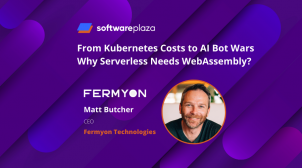
Discover Fermyon CEO Matt Butcher’s insights on serverless at scale, WebAssembly’s cost and speed advantages, AI-driven challenges, and the CNCF Spin project’s future.
Private cloud is making a comeback as enterprises seek cost savings, data control, compliance, and hybrid flexibility in a multi-cloud world.
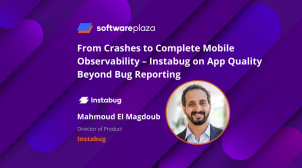
Instabug’s Mahmoud El Magdoub reveals why mobile teams must expand beyond crash reporting to embrace holistic app quality monitoring.
Sensitive NHS data at risk after a cyberattack exploits a mobile software flaw, affecting two major UK hospitals and prompting a national investigation.
Learn how to choose the right cybersecurity framework: NIST, ISO 27001, CIS Controls, or Zero Trust, based on your company’s size, risk, and maturity.
Cut hybrid cloud costs with 10 proven strategies for visibility, scaling, and smarter compute—all without sacrificing performance or agility.
Permit.io CEO Or Weis introduces just-in-time permissions and ReBAC, showing how Agent Security enables safer, smarter AI agents.
Is end-to-end encryption replacing traditional cryptography? Explore why evolving tech demands new models like E2EE, ZKPs, and post-quantum security.
Expanding a brand internationally is more than translating a website or launching in new markets. Success comes from understanding cultural nuance, adapting messaging, and balancing speed, scale, and quality. From how brands like Nike and L’Oréal tailor tone and product focus in different countries, to the importance of localization teams in connecting culturally, thoughtful global marketing drives real growth. Learn how culture, administration, geography, and economics (CAGE) shape global strategies—and why going global is possible from anywhere.